Watercolor Moose Clipart: A Designer's Guide to Whimsical Charm
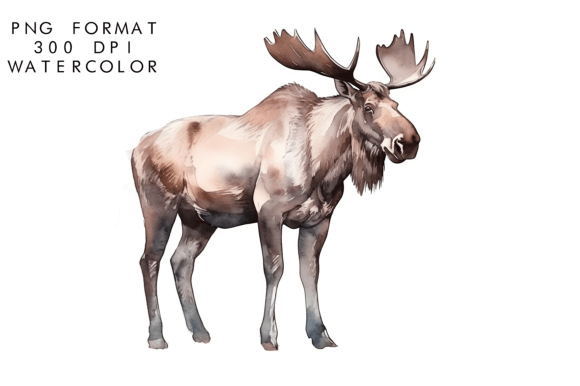
There's a certain magic in the way watercolor bleeds at the edges, creating soft, organic forms that feel both handcrafted and effortlessly beautiful. When that aesthetic is applied to a subject as iconic and majestic as a moose, the result is a piece of design asset that carries immense personality. This Watercolor Moose Clipart isn't just a simple illustration; it's a high-resolution, 300 DPI digital file designed to bring a touch of the wild, rendered in a gentle, artistic style, to your projects. The absence of watermarks means you're getting a clean, professional element ready for immediate integration into your work.
The Visual Character: More Than Just an Animal Illustration
At its core, this clipart blends the grandeur of a wild animal with the approachable, imperfect charm of watercolor art. The visual style likely features soft washes of color, subtle texture variations, and that characteristic "bleed" effect where colors gently blend into one another. The personality is one of gentle strength—appealing to audiences who appreciate nature but in a curated, artistic form. It avoids the harsh lines of vector art or the photographic realism of a stock image, occupying a sweet spot that feels personal and handcrafted. This makes it incredibly versatile for projects aiming for a warm, organic, or whimsical brand identity.
Think about the difference between a stark, geometric logo and one that feels like it was painted by hand. The Watercolor Moose Clipart leans firmly into the latter category. It’s a creative font in visual form, offering a display-like quality that can become a central focal point in a design. Its appeal lies in its ability to convey authenticity and craftsmanship, qualities highly valued in today's market of mass-produced goods.
Practical Applications: From Digital Storefronts to Nursery Walls
The true value of a design asset is measured by its utility. Here’s where this moose clipart shines across a spectrum of projects:
- Branding & Logo Design: For businesses in the outdoor, artisanal, children's, or eco-friendly spaces, this illustration can form the cornerstone of a brand identity. It works exceptionally well as a standalone mark or paired with a complementary serif font or sans serif font for a balanced, professional look. Imagine it on a coffee bag for a local roaster or as the emblem for a hiking gear company.
- Print on Demand & Merchandise: This is a prime application. The 300 DPI resolution ensures crisp prints on shirts, mugs, posters, and stickers. The watercolor style is particularly forgiving and attractive on textured products, adding perceived value.
- Publishing & Editorial Design: Use it as a chapter opener, a section divider, or a spot illustration in a children's book, a nature magazine, or a blogger's media kit. It adds visual interest without overwhelming text, aiding in visual hierarchy.
- Digital & Social Media: As a digital download, it's perfect for creating engaging social media graphics, website banners, or email newsletter headers. It can instantly elevate a Instagram post or a Pinterest pin, driving better audience engagement.
- Physical Crafts & Decor: Crafters and hobbyists will find endless uses in scrapbooking, junk journals, greeting cards, and invitations. For nursery decor or wall art, it can be printed and framed to create a cohesive theme that feels both stylish and comforting.
Strategic Considerations for Effective Use
Simply having a beautiful asset isn't enough; using it effectively is key. Here’s practical guidance for integrating this clipart into your workflow:
- Evaluate Project Fit: Ask if the whimsical, hand-painted style aligns with your project's tone. It’s perfect for brands aiming for warmth, creativity, and approachability. It may be less suited for projects requiring ultra-modern, technical, or minimalist modern typography and graphics.
- Font Pairing is Crucial: To maintain professionalism, pair the organic clipart with clean, readable typefaces. A sturdy sans serif font for body text provides excellent contrast. For headings, a simple serif font or even a restrained script font can complement the artistry without competing with it. Avoid pairing it with another highly decorative or handwritten font to prevent visual chaos.
- Test for Readability & Scale: While high-resolution, always test the clipart at the size it will be used. On a small sticker, intricate details might get lost. On a large poster, the watercolor texture will become a beautiful feature. Ensure any text overlaid on or near the image maintains strong contrast and legibility.
- Understand the Licensing: As a commercial font (or asset), the included license is critical. This file is marketed for a wide range of projects, which typically includes both personal and commercial use. However, always verify the specific terms—can you use it on end-products for sale? Are there any restrictions on the number of prints? Clarifying this protects your business and ensures you're using the premium design asset within its intended scope.
- Think Beyond the Moose: The clipart file may come as part of a bundle or could be combined with other nature-inspired elements. Consider how it interacts with other graphics, textures, or color palettes in your brand identity system to create a cohesive and recognizable look.
In the landscape of digital prints and sublimation graphics